PDD Holdings Inc. (PDD) Announced Q1 2026 Earnings on May 27, 2026, Reporting "total revenues increased 11% year-over-year to RMB 106.2 billion".
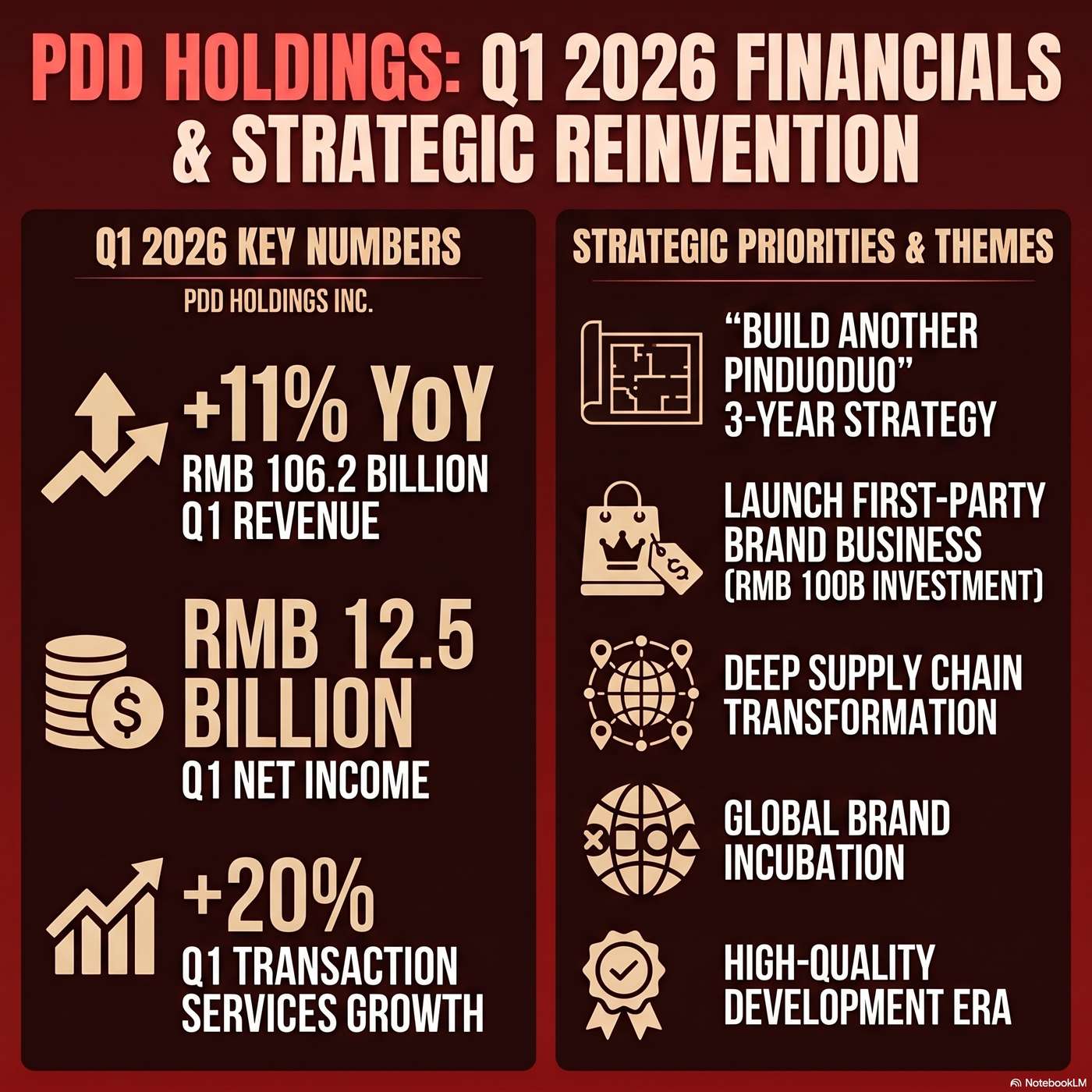
For the first quarter of 2026, PDD Holdings Inc. reported that total revenues increased 11% year-over-year to RMB 106.2 billion.
This growth was mainly driven by revenues from transaction services, which reached RMB 56.3 billion, up 20% from the same quarter last year.
Revenues from online marketing services and others for the quarter were RMB 49.9 billion.
The company reported a GAAP operating profit of RMB 19.6 billion and a non-GAAP operating profit of RMB 21.1 billion, representing a non-GAAP operating profit margin of 20%.
First quarter non-GAAP net income attributable to ordinary shareholders was RMB 14.1 billion, with non-GAAP diluted earnings per ADS of RMB 9.51.
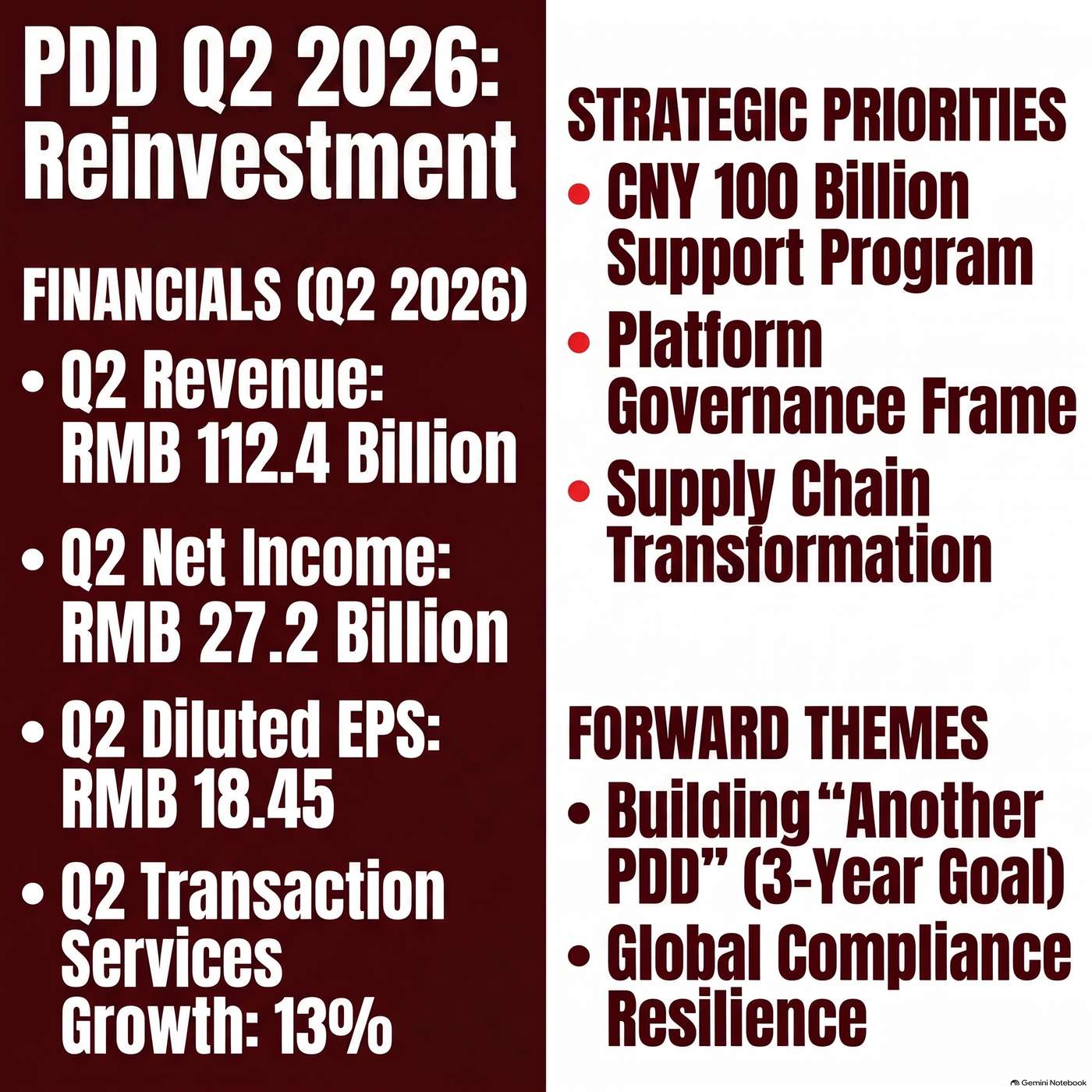
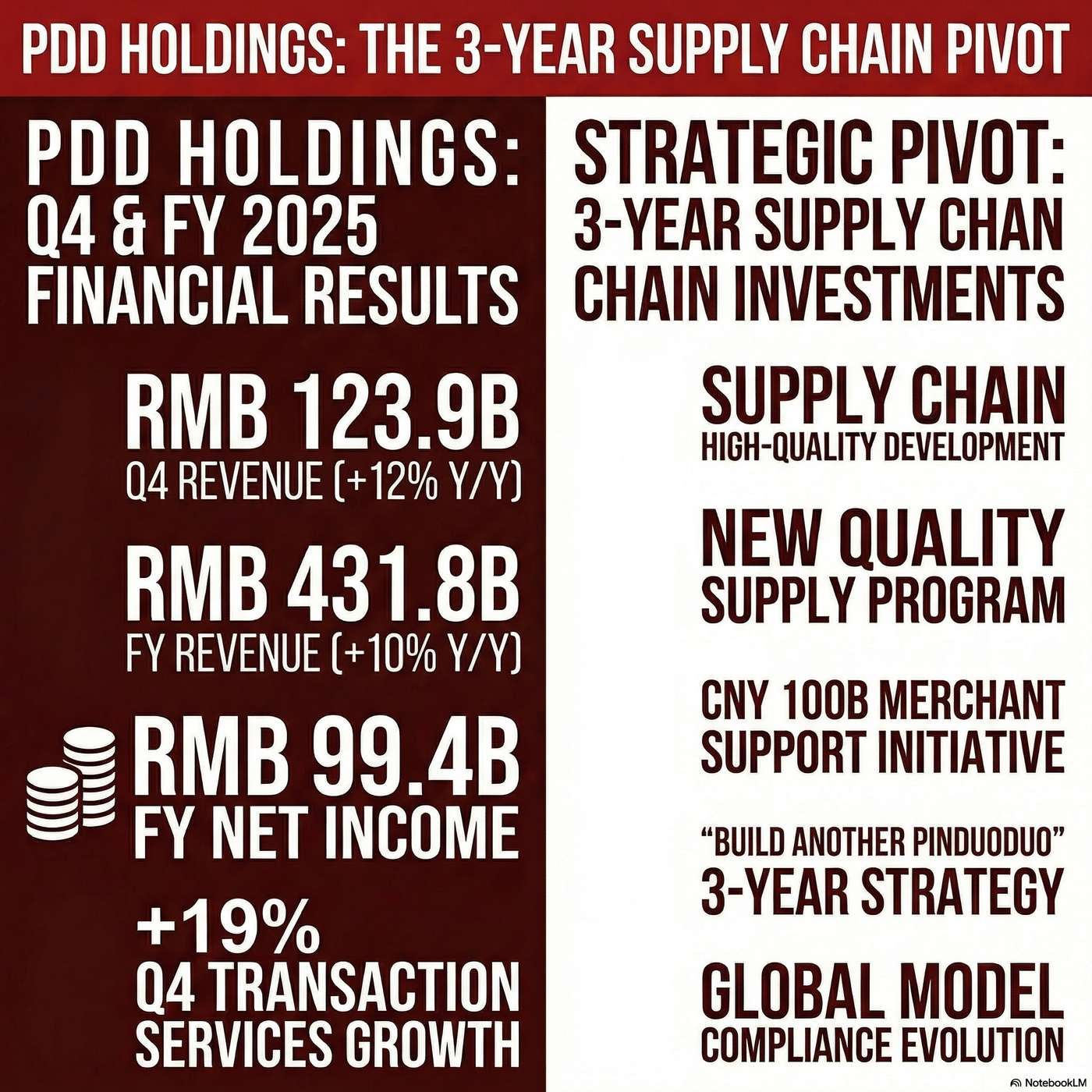
Management emphasized their transition into a new decade focused on high-quality development and a 3-year strategy to build another Pinduoduo through heavy supply chain investments. In March, the company officially launched its new first-party brand business by establishing a dedicated company in Shanghai with an initial cash injection of RMB 15 billion, and they plan to invest RMB 100 billion over the next 3 years.
This initiative is designed to consolidate supply chain resources, collaborate with global IPs to incubate new brands, and empower manufacturers to shift from volume-driven homogeneous competition to a consumer-centric, R&D-driven model.
The company also continued its investments under the RMB 100 billion support program, launching the 2026 Duo Duo Premium Produce program to deepen support across the entire agricultural value chain, including cold chain logistics and deep processing.
Additionally, PDD accelerated its free shipping to villages initiative, expanding direct-to-village coverage to over 70% of local villages in certain regions by March through the setup of county-level transport warehouses. By covering transshipping fees, the platform noted that logistics costs for shipping to some remote regions have been reduced by nearly 80%, unlocking new growth opportunities and increasing order volumes to western provinces.
Regarding future outlook, management did not provide specific numerical forward guidance.
However, executives noted that quarter-to-quarter financial fluctuations are normal due to seasonality and their own investment cycles.
The company intends to remain resolute in its long-term supply chain investments, prioritizing the healthy development of the platform ecosystem and foundational capabilities over short-term financial performance.
Related Episodes