Zscaler, Inc. (ZS) Announced Q2 2026 Earnings on February 26, 2026, Reporting "Revenue of $816 million grew 26% year-over-year"
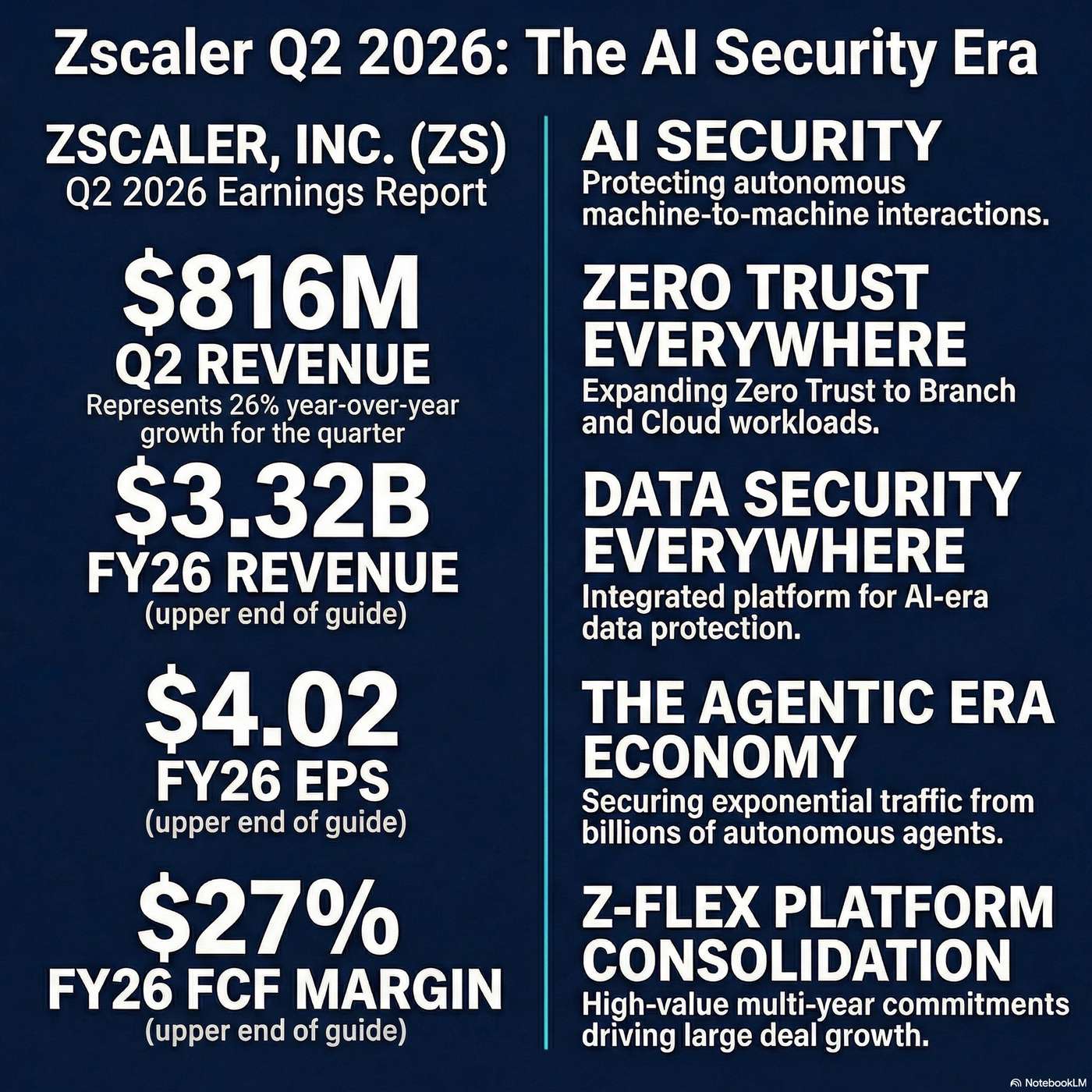
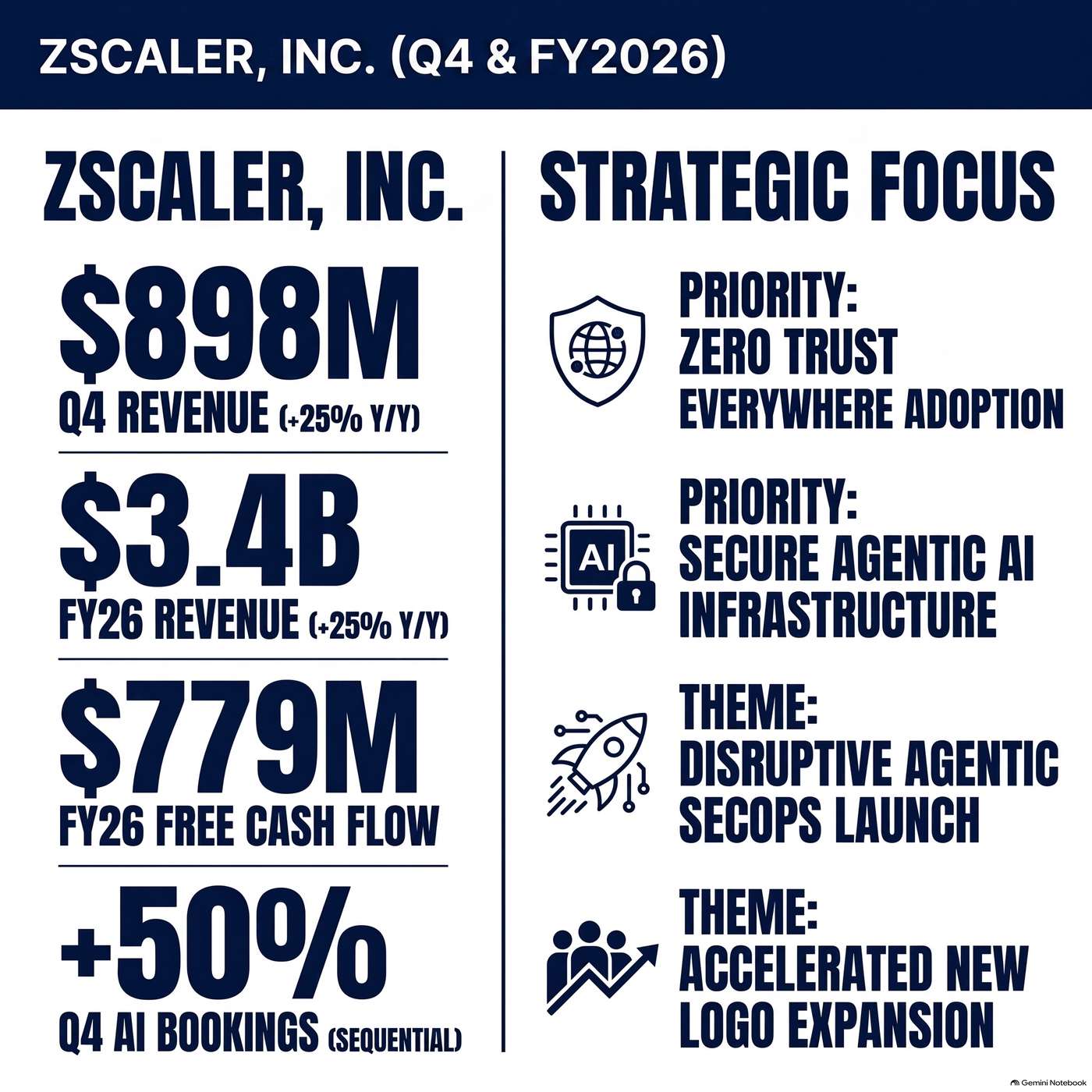
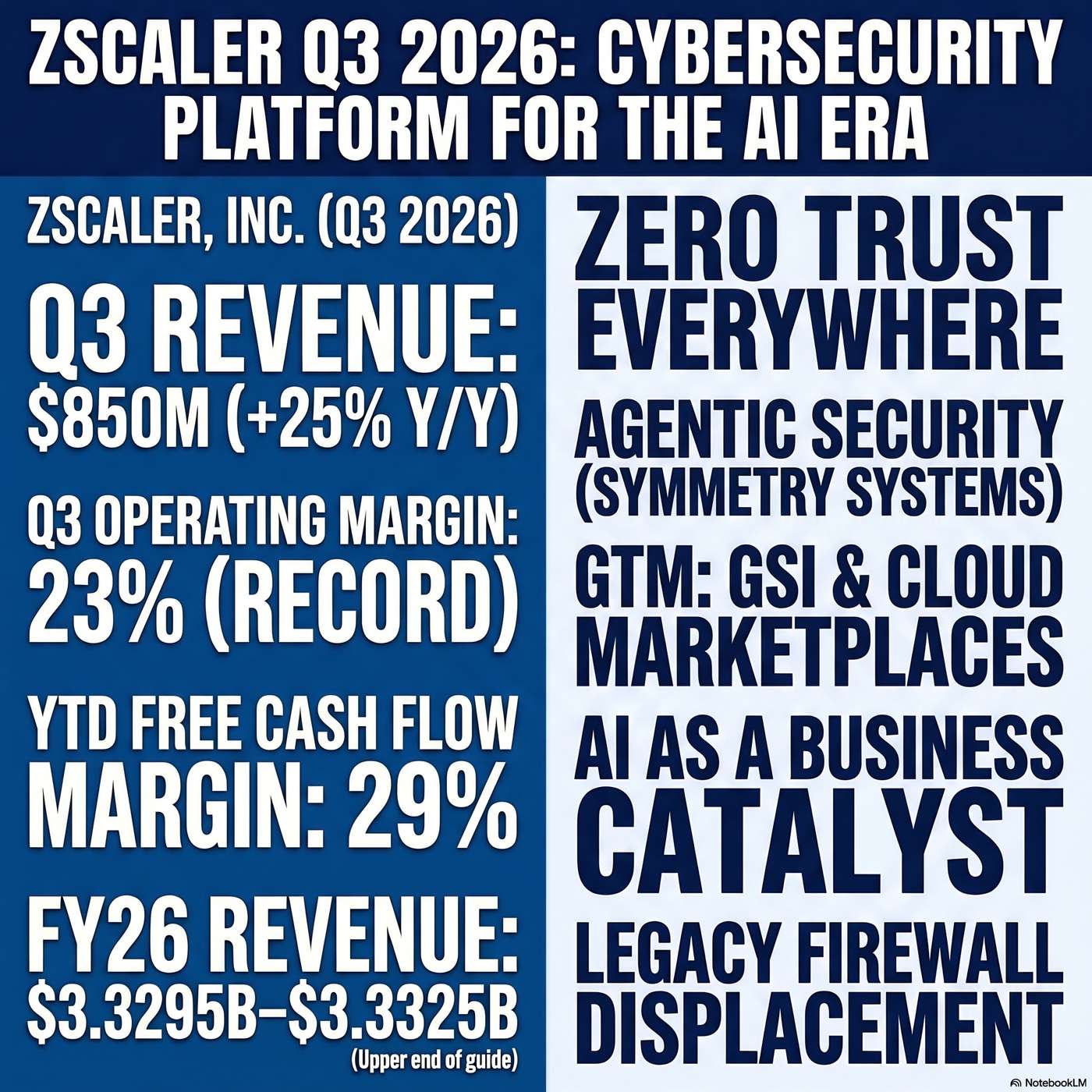
Zscaler, Inc. reported financial results for the second quarter of fiscal 2026. Revenue for the quarter was $816 million, which grew 26 percent year-over-year. Total annual recurring revenue was $3.4 billion, representing 25 percent year-over-year growth. For the quarter, non-GAAP operating income was $181 million, growing 29 percent year-over-year, with a non-GAAP operating margin of 22.2 percent. The company generated a free cash flow margin of 20.7 percent for the quarter and ended the period with $3.5 billion in cash, cash equivalents and short-term investments.
Management highlighted strong demand across three growth pillars, which include AI security, Zero Trust Everywhere, and Data Security Everywhere. The company discussed its newly introduced AI Protect solution for securing enterprise AI adoption, as well as its Z-Flex program which generated more than $290 million in total contract value during the quarter. Management noted that non-seat-based metered usage solutions delivered just over one quarter of new annual contract value. The company also announced the recent closures of its acquisitions of SquareX for browser security and Red Canary for agentic security operations, though management noted that Red Canary's churn has been elevated post acquisition.
For the third quarter of fiscal 2026, Zscaler expects revenue of $834 million to $836 million and an operating profit of $187 million to $189 million. For the full year fiscal 2026, the company guided for revenue of $3.09 billion to $3.322 billion, and total annual recurring revenue of $3.730 billion to $3.745 billion. Full year operating profit is expected to be $742 million to $748 million with a free cash flow margin of approximately 26.5 percent to 27 percent. Management stated they will continue to monitor the recent increases in memory, storage, and processor prices, which could become a factor in the future as they purchase equipment for data centers and branch appliances.
Related Episodes